VNMKV Parbhani: Complete Guide to Vasantrao Naik Marathwada Krishi Vidyapeeth, Courses, Colleges, Research and Student Facilities
Vasantrao Naik Marathwada Krishi Vidyapeeth (VNMKV), Parbhani is one of the prominent agricultural universities in Maharashtra, playing an important role in agricultural education, research and technology transfer across the Marathwada region.
Established in 1972, the university has developed a broad academic and research network covering agriculture and several allied disciplines. For students planning higher education in agriculture and related fields, VNMKV offers opportunities ranging from undergraduate programmes to postgraduate and doctoral studies.
Along with Agriculture, students can pursue academic programmes in areas such as Horticulture, Agricultural Engineering, Food Technology, Community Science, Biotechnology and Agri-Business Management.
History of VNMKV
VNMKV was established in 1972 as Marathwada Agricultural University. The region already had an established base for agricultural education, with the College of Agriculture, Parbhani established in 1956.
The university was established with a focus on strengthening agricultural education, research and extension activities according to the specific needs of the Marathwada region.
The region has distinctive agricultural conditions, including variations in rainfall, climate, cropping patterns and water availability. These factors have made agricultural research and technology development particularly important for the region.
Over the years, VNMKV has expanded its academic, research and extension network to address agricultural challenges and support students, researchers and farming communities.
Where is VNMKV located?
Address: Basmat Road, Parbhani, Maharashtra – 431402
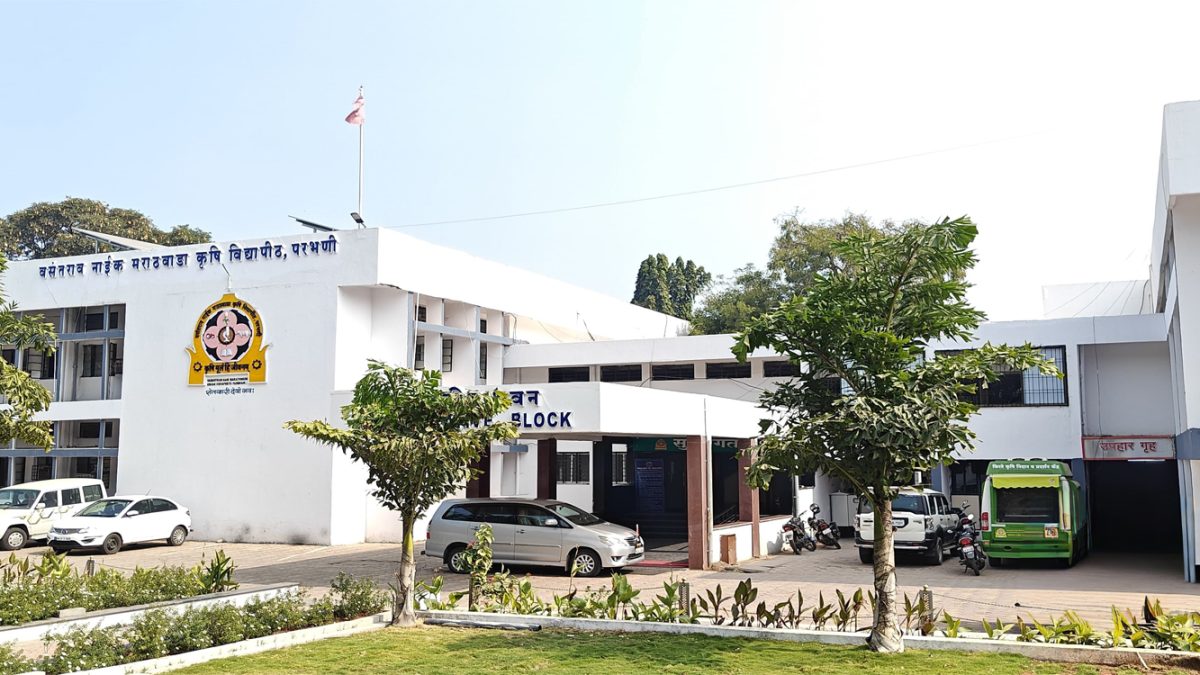
Parbhani is an important agricultural and educational centre in Maharashtra’s Marathwada region. The university’s main administrative and academic campus is located in the city.
Courses Offered at VNMKV
VNMKV offers academic programmes across agriculture and allied disciplines at different levels.
The major academic levels include:
- Undergraduate (UG) Programmes
- Postgraduate (PG) Programmes
- Ph.D. Programmes
- Diploma Courses
- Certificate Courses
Major areas of study include:
- Agriculture
- Horticulture
- Agricultural Engineering
- Food Technology
- Biotechnology
- Community Science
- Agri-Business Management
This diverse academic structure provides students with career opportunities beyond traditional B.Sc. Agriculture programmes, including several specialized fields within agriculture and allied sciences.
Major Colleges under VNMKV
VNMKV has a wide academic network with colleges focusing on agriculture and allied disciplines.
Agriculture Colleges
- College of Agriculture, Parbhani
- College of Agriculture, Latur
- College of Agriculture, Badnapur
- College of Agriculture, Ambajogai
- College of Agriculture, Dharashiv
- College of Agriculture, Golegaon
- College of Agriculture, Nanded
- College of Agriculture, Lihakhedi
- College of Agriculture, Jirewadi
Horticulture
- College of Horticulture, Parbhani
Agricultural Engineering
- College of Agricultural Engineering and Technology, Parbhani
Food Technology
- College of Food Technology, Parbhani
Community Science
- College of Community Science, Parbhani
Biotechnology
- Vilasrao Deshmukh College of Agricultural Biotechnology, Latur
Agri-Business Management
- Post Graduate Institute of Agricultural Business Management, Chakur
- College of Agri. Business Management, Jirewadi
These institutions provide students with opportunities to pursue education, practical training and research in different areas of agriculture and allied sciences.
How Large is VNMKV’s Academic and Research Network?
VNMKV has developed a large academic, research and extension network across the region.
Its research and extension infrastructure includes:
- 17 Regional Research Stations
- 23 Research Stations
- 17 AICRP Schemes
- 7 KVKs & ATIC
This extensive network connects academic education with agricultural research and field-level activities, providing opportunities for students and researchers to gain exposure beyond classroom learning.
VNMKV’s Role in Agricultural Research
Agricultural research is one of the major areas of activity at VNMKV. Research programmes are designed around the agricultural conditions and challenges of the Marathwada region.
Research activities cover areas related to crops, agricultural technologies, natural resources, crop production and other aspects of agricultural development.
The university’s research network includes regional research stations, research stations and All India Coordinated Research Projects (AICRP). These facilities support the development and evaluation of technologies aimed at improving agricultural productivity and addressing field-level farming challenges.
VNMKV’s Role in Supporting Farmers
VNMKV is not limited to classroom-based agricultural education. Its activities also extend to agricultural technology transfer, farmer training and field-level extension programmes.
The university works in areas such as crop production, crop protection, harvesting, marketing and post-harvest management. Activities related to livestock, fisheries and other allied agricultural sectors are also part of the broader agricultural development framework.
Through KVKs, ATIC and extension activities, agricultural technologies and scientific information can reach farming communities across the region.
Opportunities in Agricultural Engineering and Food Technology
One of the important features of VNMKV is the availability of specialized programmes alongside conventional agricultural education.
Agricultural Engineering
Agricultural Engineering provides students with career pathways in areas such as farm machinery, irrigation systems, agricultural structures, processing technologies and other engineering applications in agriculture.
Food Technology
Food Technology offers opportunities in food processing, food engineering, food chemistry, microbiology, packaging and food-related industries.
The College of Food Technology, Parbhani offers programmes at the B.Tech., M.Tech. and Ph.D. levels, providing students with opportunities for higher education and specialization in food technology.
Vice-Chancellor of VNMKV
The current Vice-Chancellor of VNMKV is Prof. (Dr.) Indra Mani. He assumed charge as Vice-Chancellor on 25 July 2022.
Prof. Indra Mani has an academic and research background in Agricultural Engineering. He has also held various responsibilities at the ICAR-Indian Agricultural Research Institute, New Delhi, in the field of Agricultural Engineering.
During his tenure, emphasis has been placed on academic development, research, infrastructure, training and collaborations with academic and other institutions.
Key Features of VNMKV
For students considering VNMKV as a higher education option, some of its major features include:
Established Agricultural University:
The university has been serving the agricultural education and research
sector since 1972.
Multiple Academic Disciplines:
Along with Agriculture, students can pursue Horticulture, Agricultural
Engineering, Food Technology, Biotechnology, Community Science and
Agri-Business Management.
Extensive Research Network:
Regional Research Stations, Research Stations and AICRP projects provide
a broad research ecosystem.
Strong Farmer Connect:
KVKs, ATIC and extension programmes connect agricultural education and
research with farming communities.
UG to Ph.D. Opportunities:
Students can pursue undergraduate, postgraduate and doctoral education
along with diploma and certificate-level programmes.
Student Support Services:
Academic and student services include library facilities, student welfare,
placement support, examinations, results, anti-ragging initiatives and
Academic Bank of Credits-related services.
What Should Students Check Before Taking Admission?
Students planning to take admission at VNMKV should evaluate the specific course and college rather than making a decision only on the basis of the university name.
Before applying, students should check:
- Course eligibility
- Admission authority
- Entrance examination requirements
- Counselling process
- College-wise seat matrix
- Tuition and other fees
- Hostel availability
- Hostel and mess charges
- Scholarship opportunities
- Internship and practical training
- Placement opportunities
- College location
- Academic curriculum
Admission rules, fees, seat availability and counselling schedules may change from one academic year to another. Students should therefore verify the latest notification before completing the admission process.
Official Information
For admission, courses, examinations, results, colleges, notifications and other important information, students can visit the official VNMKV portal:
https://www.vnmkv.ac.in/
Conclusion
Vasantrao Naik Marathwada Krishi Vidyapeeth, Parbhani is one of Maharashtra’s important institutions for agricultural education, research and extension. Established in 1972, the university has built a broad academic and research ecosystem serving the agricultural needs of the Marathwada region.
With programmes ranging from UG to Ph.D., colleges covering Agriculture and allied disciplines, research stations, KVKs and field-level extension activities, VNMKV provides students with opportunities to combine academic learning with practical exposure to agriculture and related sectors.
For students planning a career in Agriculture, Horticulture, Agricultural Engineering, Food Technology, Biotechnology, Community Science or Agri-Business Management, VNMKV can be considered as an important higher education option.
Before applying for any programme, students should carefully check the latest eligibility criteria, admission process, seat matrix, fees, hostel facilities, scholarships and counselling rules applicable to the respective academic year.